
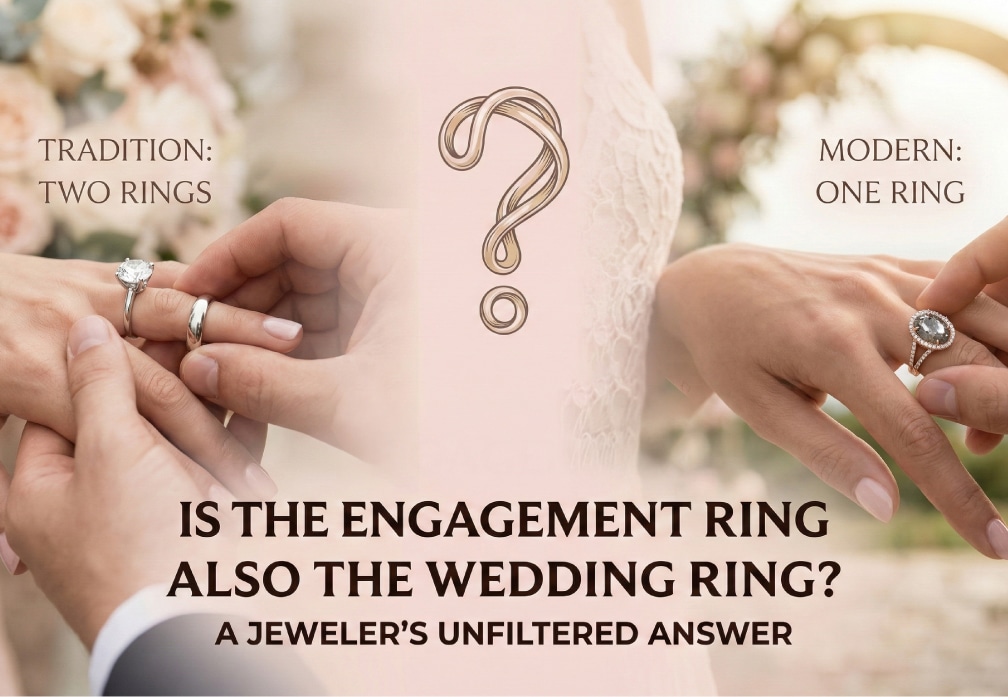
No, traditionally the engagement ring is not also the wedding ring. The engagement ring is given at the proposal and usually has a main center stone, while the wedding ring (or band) is exchanged at the wedding ceremony and is typically simpler. However, many modern couples are choosing to use a single ring for both.
But let’s be real for a second.
I want to share a story from a recent Reddit post that I absolutely loved. A user, in the middle of picking out rings with their partner, had what they called ‘a full blown meltdown’ and asked the internet, “wait… What’s the difference?!”
I love this because it is so honest, so incredibly real, and it is the single most common point of secret panic I see with couples. You are not alone. This is genuinely confusing stuff that nobody really explains.
Deal Alert: Mother’s Day Sale Up To 30% Off* select fine jewelry at Blue Nile.
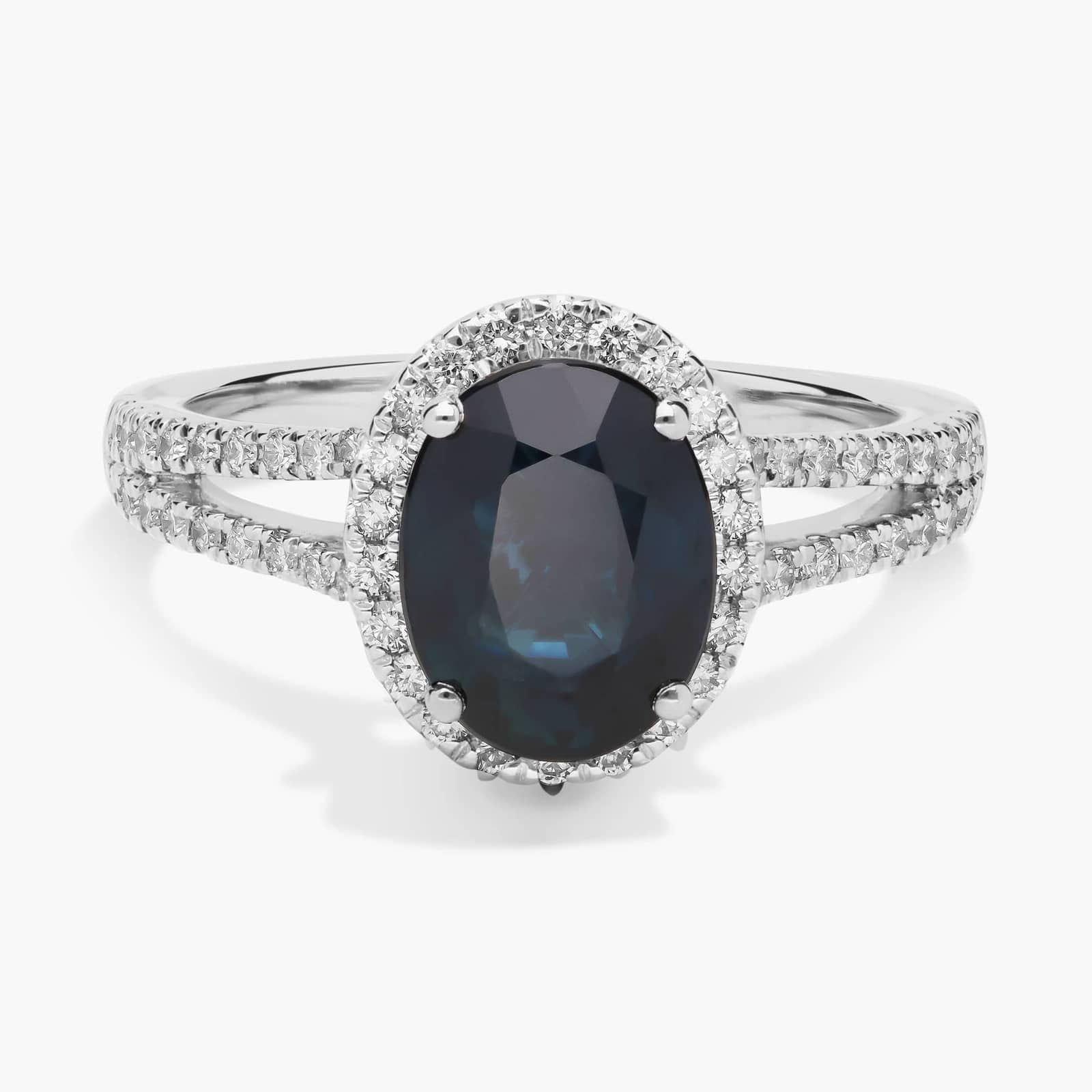
New Collection: Shop the James Allen Collection at Blue Nile.
Vault Sale: “Clear The Vault” – Get up to 70% OFF at Blue Nile!
Flash Sale: Save up to 40% OFF sitewide at Rare Carat.
Exclusive: Get up to 60% OFF select fine jewelry at Ritani.
So as your friend in the business, I’m here to give you the honest, unfiltered answer that the big diamond companies won’t. We’re going to break down the traditional rules, and then we’re going to talk about why it is more than okay to break them.
We’ll cover the difference, the beautiful symbolism, and all the modern options that are open to you, so you can make the choice that is 100% right for you, without any of the stress.
Let’s settle this, once and for all.
Diamond IQ Test: Natural or Lab-Grown?
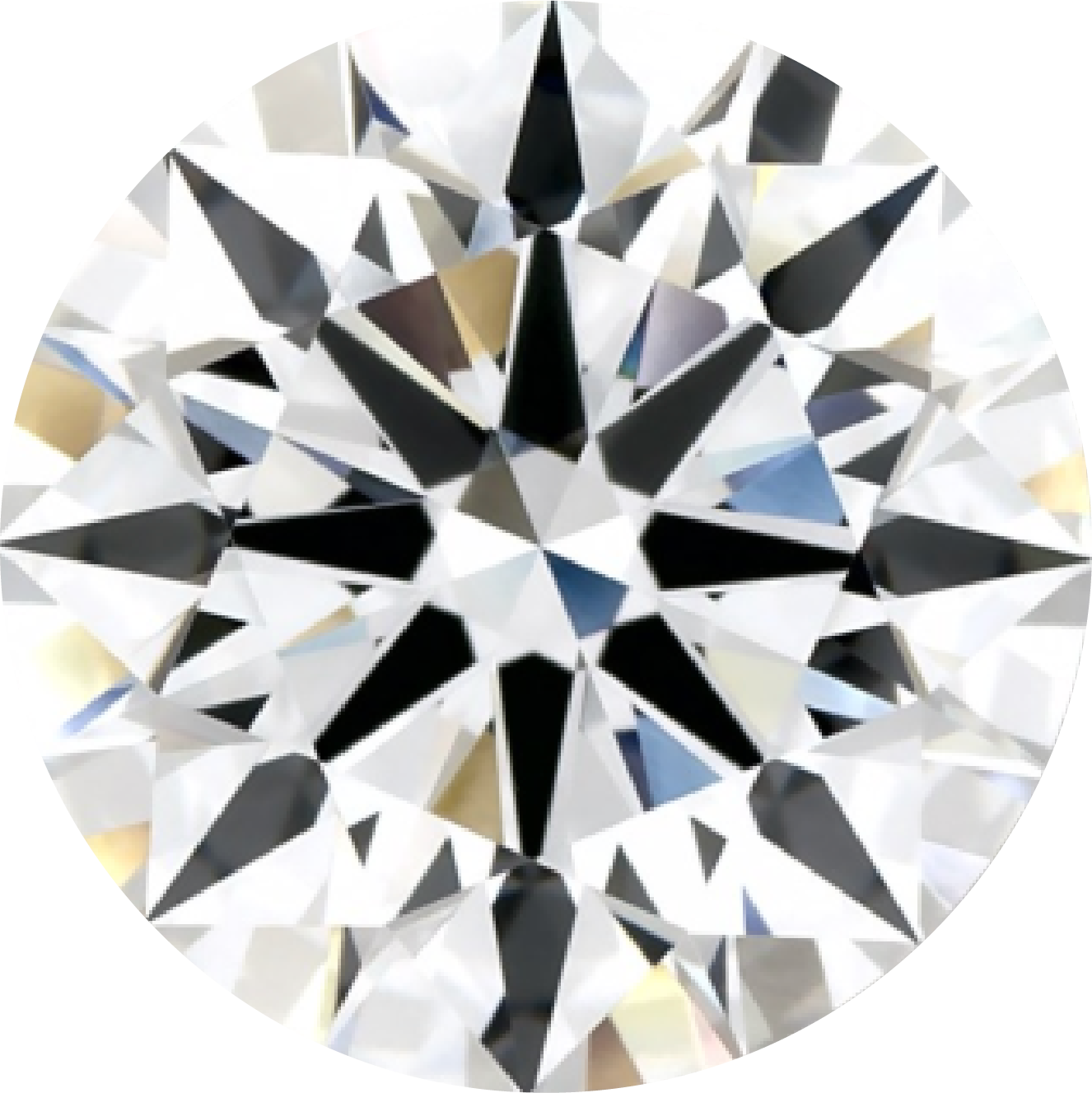
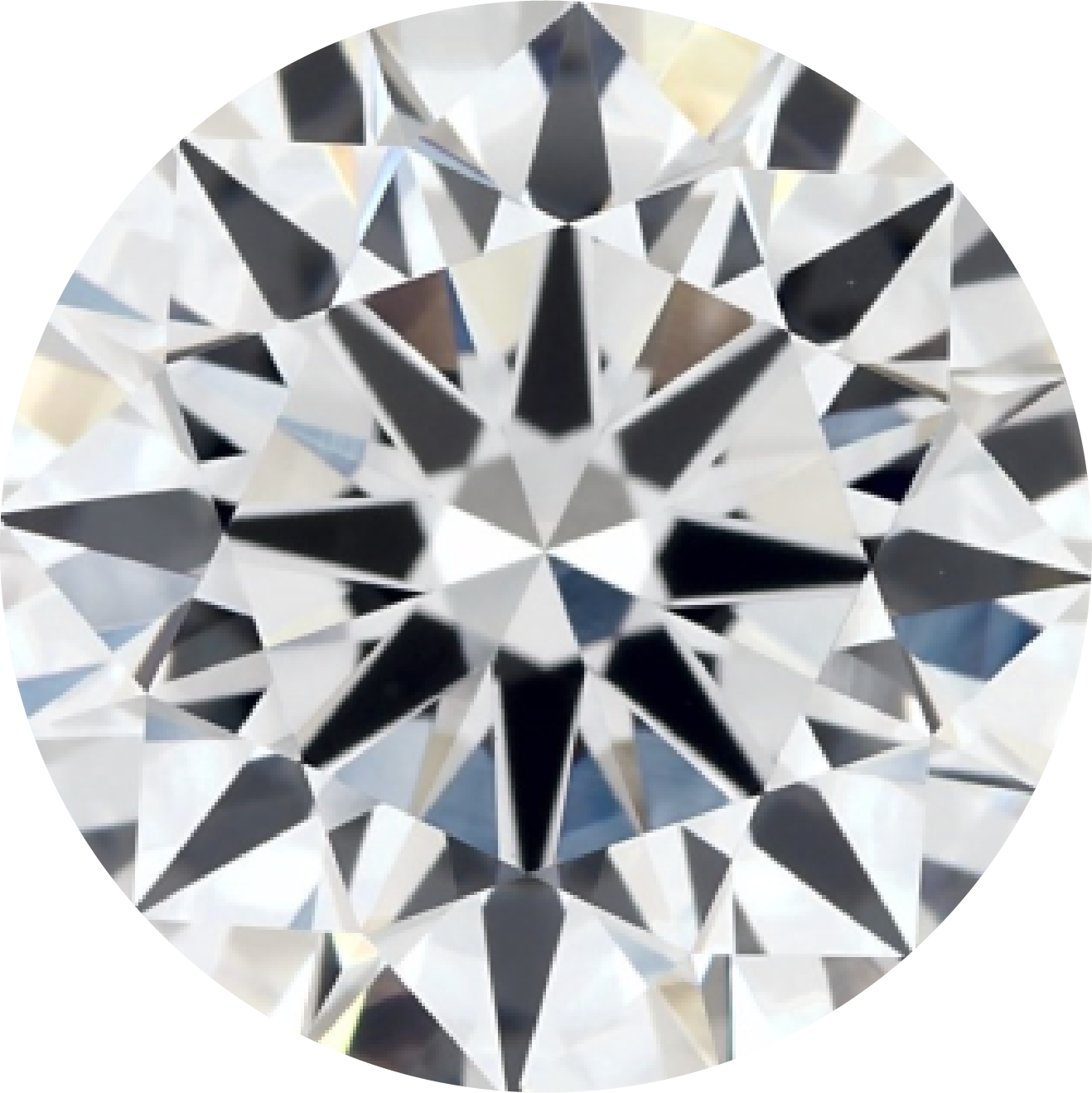
Two identical diamonds: GIA Certified, 1.51ct, D Color, VVS1, Ideal Cut. One is natural ($16,240), the other is lab-grown ($1,970). Choose the diamond you like better and see if you can match it to its origin.
The Traditional Rulebook: What’s the Difference, Really?
Okay, so before we talk about breaking the rules, let’s make sure we actually know what the traditional rules are. The confusion you’re feeling is real, and as one Reddit user perfectly summed it up after trying to Google the answer, their top result was another user’s comment because it was “THE FIRST answer… that isn’t from a diamond company.”
So let me give you the straight, honest, jeweler-to-friend explanation. Traditionally, they are two separate rings with two very distinct jobs.
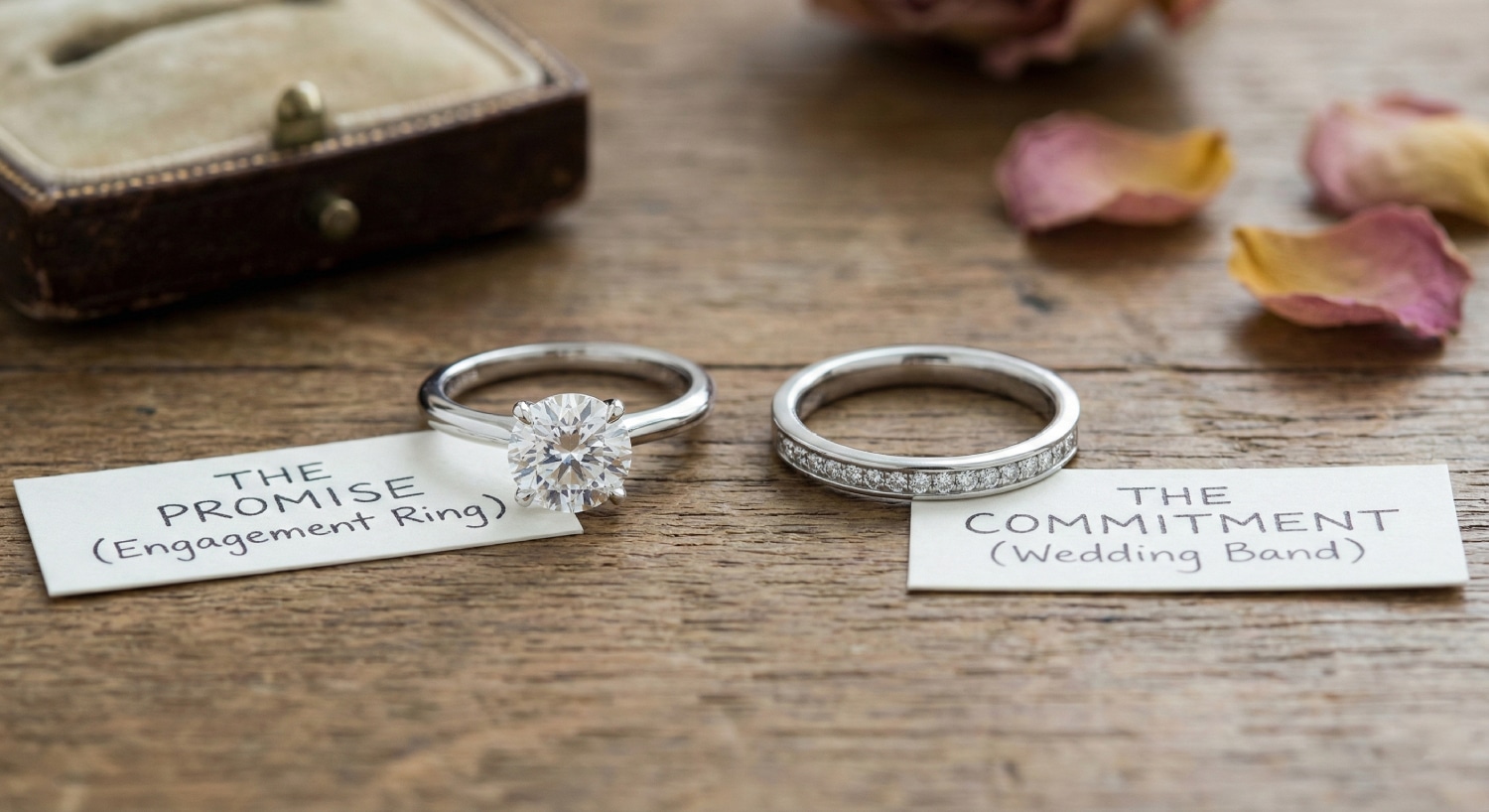
What is an Engagement Ring (Traditionally)? The “Promise”
Think of the engagement ring as the “Promise.” Its one and only job is to be the centerpiece of the proposal. It’s the ring your partner gets down on one knee with, the symbol of the promise to get married.
- Its Role: To be given at the moment of proposal and worn throughout the entire engagement period to signify that you are “spoken for.”
- Its Look: An engagement ring is almost always the “showstopper.” It is designed to be the star of the show and features a prominent center stone, which is most often a diamond but can be any beautiful gemstone.
As one user in that same Reddit thread perfectly put it, “Engagement rings tend to have a larger centre stone, while the wedding ring is usually just a band.”
It is the main event. It’s the ring that captures the eye and tells the world you’re getting married. Whether that showstopper is a classic colorless stone or a vibrant gem from the fancy colored diamonds chart, its defining feature is that breathtaking center stone.
What is a Wedding Ring (Traditionally)? The “Commitment”
If the engagement ring is the promise, then the wedding ring is the “Commitment.” This is the ring that is actually exchanged during the wedding ceremony itself, while you are saying your vows. It is the official, binding symbol of your marriage.
- Its Role: To be exchanged during the wedding ceremony and worn for the rest of your lives to signify that you are officially married.
- Its Look: A wedding ring, also called a “wedding band,” is traditionally much simpler. Its job is to complement the engagement ring, not overshadow it. It is typically a plain metal band or a band set with smaller, embedded diamonds (like a pavé or eternity band).
If the engagement ring is the star quarterback, the wedding band is the brilliant offensive line—it supports the star and makes the whole team look complete. And because this ring has its own beautiful story and crucial timeline, it’s essential to plan for it.
We explore that in our definitive guide, Who & When to Buy Wedding Bands: The Ultimate A-Z Guide.
Why Two Rings? The Symbolism Behind the Stack
Alright, so let’s get into the “why.” Why two rings? Is this just a brilliant marketing ploy by the jewelry industry to sell you more stuff, or is there a real, meaningful story here?
Mehedi’s Insider Explanation: “I get this question all the time, and I love answering it. The ‘two-ring’ tradition isn’t just a marketing ploy; it’s steeped in beautiful, powerful symbolism. Think of it like this: The engagement ring is the question. It’s the promise of a future together.
The wedding band, exchanged during your vows, is the answer. It’s the fulfillment of that promise, the official start of your forever. When you wear them together, you’re wearing the complete story of your commitment, from the proposal to the altar.”
The Stacking Tradition: Closest to the Heart
But the beautiful story doesn’t end there. There is a very specific and romantic tradition for how you wear them after the wedding, and it’s a detail I absolutely love.
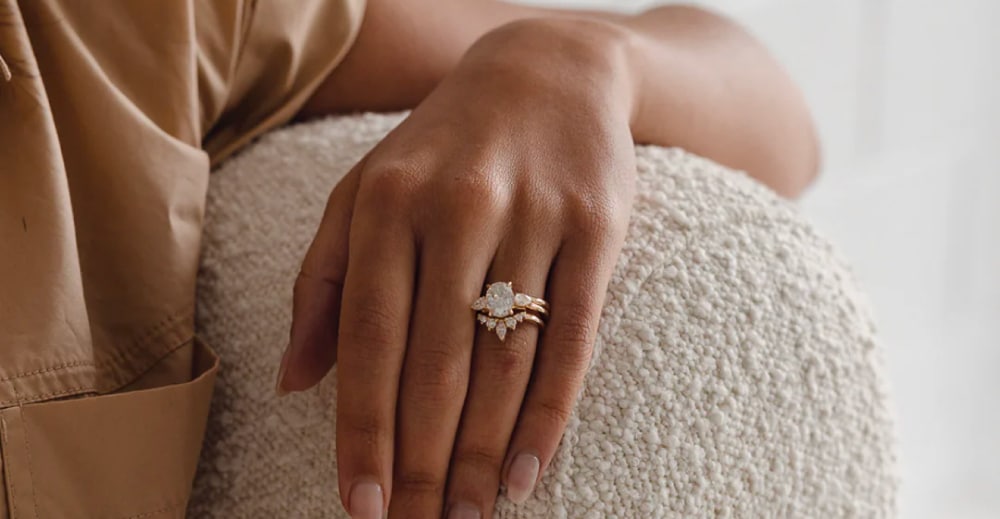
After the ceremony, the wedding band goes on your finger first, and then the engagement ring is stacked on top of it, on the outside. Why?
“The wedding ring goes on first, closest to your heart. The engagement ring then sits on the outside, symbolically ‘protecting’ the marriage.”
It’s a beautiful sentiment. Your marriage commitment is held closest to you, and the promise that led you there stands guard over it. It’s a small detail, but it turns the simple act of wearing your rings into a daily reminder of that beautiful story.
This single question is one of the most common points of confusion for couples, but the answer is one of the most romantic parts of the whole tradition.
Understanding what makes a ring a promise is key, especially when that promise is as unique and special as your relationship. That’s why I love when couples explore incredible, one-of-a-kind gems that tell a story all their own.
You can dive deeper into the world of beautiful promises with my guides to the sophisticated and chic Gray Diamond or the truly mysterious Chameleon Diamond.
The New Rulebook: It’s Your Story, Your Rings
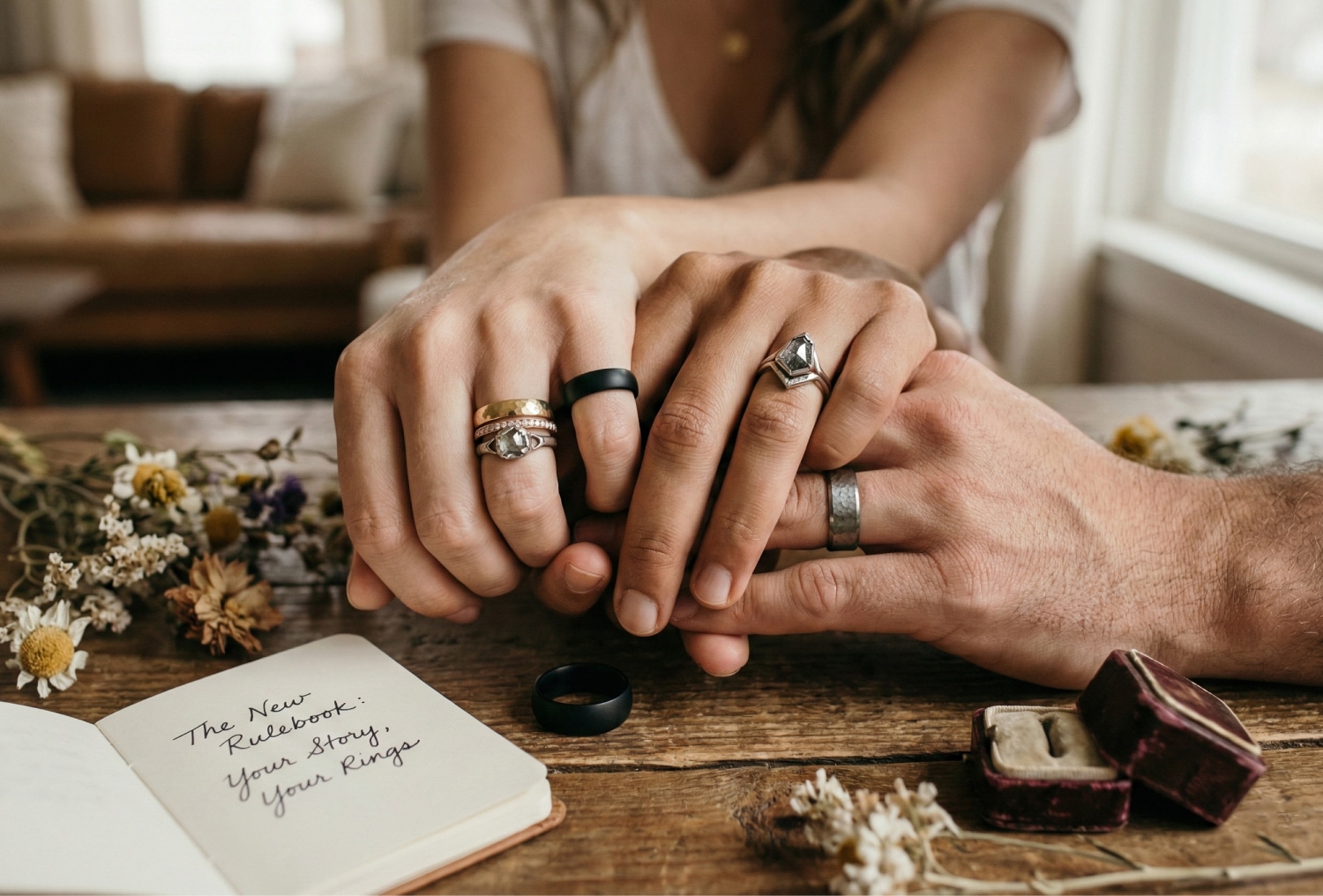
Okay, we’ve covered the old rules. We’ve talked about the symbolism and the tradition. Now, as your friend in the business, I’m going to tell you the single most important rule of all: There are no rules. Just like the Reddit user who had the meltdown finally realized,
if the rings don’t match what an engagement ring or wedding ring should be, what does it even matter.
She is 100% right. Your love story is unique, your relationship is unique, and your rings should be too. Anyone who tells you that you ‘have to’ do something a certain way is trying to sell you something. The modern rulebook has only one rule: do what feels authentic to you.
So let’s bust some myths. To make it crystal clear, here is a “cheat sheet” to the modern approaches you can take, compared to the traditional path.
| Aspect | Engagement Ring (The Promise) | Wedding Band (The Commitment) |
|---|---|---|
| When It’s Given | At the proposal | Exchanged during the wedding ceremony |
| Traditional Design | Features a main, prominent center stone | Typically a simpler band (plain or with small diamonds) |
| Symbolism | “Will you marry me?” | “I do.” |
| Who Wears It | Traditionally, the person who was proposed to | Traditionally, both partners |
Now, let’s dive into the details of what makes each of these modern choices so brilliant.
The One-Ring Wonder: Can the Engagement Ring Be the Wedding Ring?
Here is the unfiltered, simple, one-word answer: YES.
Not only can you, but it is an increasingly popular, chic, and minimalist choice. If you adore your engagement ring and love the look of it on its own, you absolutely do not need to add a wedding band.
You can simply have your partner place that same ring back on your finger during the ceremony, and it becomes the one, powerful symbol of your entire love story. As one smart Redditor pointed out,
It’s the engagement ring until you get married, then you exchange them as part of the ceremony and boom! Now they’re your wedding rings!
Just the Bands, Please: The Power of Simplicity
What if you don’t even want a traditional engagement ring at all? You are in excellent company. A huge and growing number of modern couples are choosing to skip the big center-stone ring entirely, opting for beautiful wedding bands that they exchange on the day. The reasons are both practical and stylish:
- Budget: They’d rather save the money. It’s a brilliant way to be financially savvy, a theme at the heart of my guide, Is $1000 a Lot for a Wedding Ring?.
- Lifestyle: Many people with active jobs don’t want a high-profile ring that can snag. A simple band is more practical.
- Style: For many, it’s just a cleaner, more minimalist aesthetic.
As one Reddit user shared,
Neither my partner nor I have engagement rings. We will have matching wedding bands when we get married.
This approach is about choosing a symbol that fits your real, everyday life.
Perfectly Mismatched: Do They Have to Match?
Let me say it again: absolutely not! The idea that your wedding band must be a perfect, factory-matched set is dead. “Mismatched” or curated stacks are one of the biggest and most beautiful trends in bridal jewelry.
It’s about creating a look that has personality. You can mix your metals (a yellow gold engagement ring with a platinum wedding band) or mix your styles (a modern solitaire with a vintage-inspired band). Your rings don’t have to match each other; they have to match you.
Both Partners, Both Rings: The Rise of the Men’s Engagement Ring
This is one of my favorite evolving traditions. In many countries, it’s always been customary for both partners to receive an engagement ring. And today, more and more couples everywhere are embracing this idea.
Why should only one person get to wear a symbol of this special time? This is especially popular with my same-sex clients, but I see it with all types of couples who are beautifully rewriting the rules.
Ultimately, choosing your rings is about what you wear for a lifetime, and the most important decision is choosing materials built to last. I’ve covered every pro and con for this in my complete guides to Engagement Ring Metals and the Best Materials for Men’s Wedding Bands.
The Practical Guide: Pairing, Shopping, and Wearing
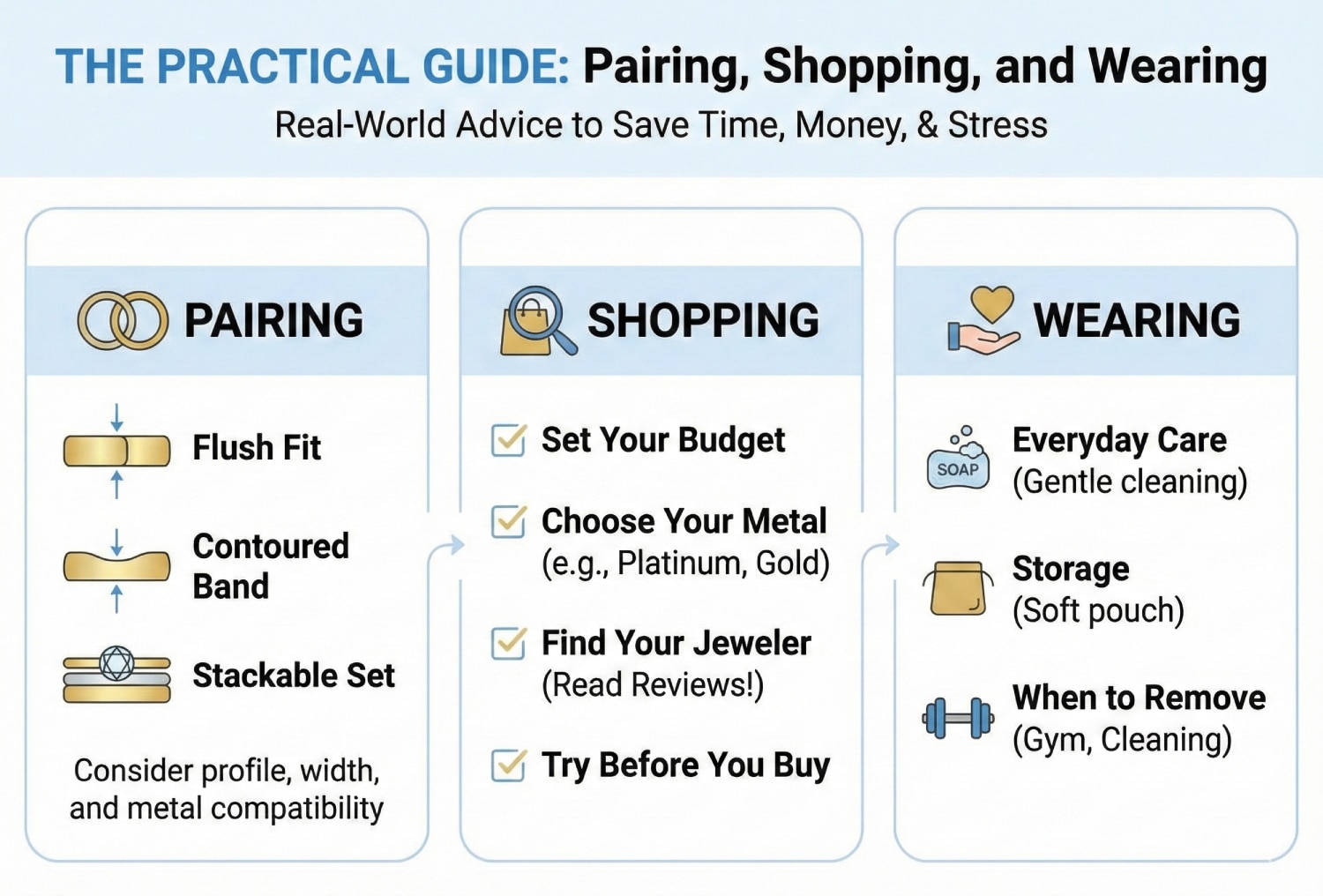
Alright, you know the traditions, and you know the modern rules (or lack thereof). Now let’s get into the practical, real-world advice that will save you time, money, and a whole lot of stress. This is the nitty-gritty of getting it right.
The Perfect Pairing: Avoiding the “Dreaded Gap”
This is the single most common frustration I hear from clients after they’ve bought their rings: “There’s an annoying gap between my engagement ring and my wedding band!” Let’s solve that problem before it ever starts. The fit comes down to two main types of bands.
- The Straight Band: This is your classic, straight-across wedding band. It will sit perfectly flush against an engagement ring that has a high-profile head (meaning the center stone is set high enough for the band to slide cleanly underneath it). A traditional, simple solitaire is a perfect candidate for a straight band.
- The Curved or “Contour” Band: This is your problem-solver. A contour band has a slight curve in it, designed to “hug” the shape of your engagement ring. It’s the perfect puzzle piece, and it’s absolutely necessary if your engagement ring has:
- A low-profile setting (where the center stone sits low to the finger).
- A halo setting.
- A fancy shape with a wide base, like a Pear or Marquise cut.
My Pro Tip: “When shopping, look at the side-profile view of your engagement ring. Is there a clear, open space underneath the center setting? If not, you are almost certainly going to need a contour band to get that perfect, seamless fit.” You can see many examples of rings that require this in my complete Oval Cut Diamond Buying Guide.
The Fusion Option: To Solder, or Not to Solder?
Once you have your two perfect rings, you have another big decision to make: should you have a jeweler permanently fuse them together? It’s called soldering, and it’s a popular choice, but you need to know the pros and cons.
- Perfect Alignment, Always: This is the number one reason people do it. Soldering ensures your rings are always perfectly aligned and never spin out of place. No more constantly adjusting your stack.
- Enhanced Comfort: A single, fused piece often feels more comfortable and substantial than two separate rings that can pinch or move around.
- Reduced Wear and Tear: This is my “insider” tip. Two separate rings will constantly rub against each other, slowly wearing down the metal and the prongs over decades. Fusing them into one piece prevents this friction and can add to the longevity of your set.
- Loss of Versatility: This is the big one. Once they are fused, you can’t wear just your wedding band to the gym, to the beach, or on days when you just want a more understated look.
- Less Styling Fun: The trend of mixing and matching different stacking bands with your wedding set becomes much more difficult.
- A More Complex Resize: If your finger size changes down the line, resizing a single, soldered piece can be more complex and expensive than resizing a simple band.
My Honest Advice: “Live with them as separate rings for the first year of marriage. See how you actually wear them. If you find you are always wearing them together and the spinning is driving you crazy, then go to a trusted jeweler and have them fused. There’s no rush to make a forever decision.”
Where to Buy Your Rings
In today’s market, this is the easiest decision you’ll make. For the absolute best selection, superior quality, and incredible value, you must shop online. My two premier recommendations for both engagement rings and wedding bands are James Allen and Blue Nile.
Here’s why:
- Vast Selection: They have thousands of options, from a simple, classic platinum band to a complex, diamond-encrusted eternity ring. You’ll find the perfect match.
- Superior Value: Without the overhead of a brick-and-mortar store, their prices are consistently better than traditional retail, often by 30-50%.
- Visualization Technology: This is the game-changer. Their high-resolution, 360° videos and virtual try-on features are absolutely essential for seeing how a wedding band will look and, in some cases, how it will pair with an engagement ring.
Knowing who to trust with this once-in-a-lifetime purchase is everything. To see how the top online players stack up against each other, you can read my in-depth, bare-knuckle comparison, Ritani vs. Blue Nile: An Expert’s Unfiltered Review.
Deal Alert: Mother’s Day Sale Up To 30% Off* select fine jewelry at Blue Nile.
New Collection: Shop the James Allen Collection at Blue Nile.
Vault Sale: “Clear The Vault” – Get up to 70% OFF at Blue Nile!
Flash Sale: Save up to 40% OFF sitewide at Rare Carat.
Exclusive: Get up to 60% OFF select fine jewelry at Ritani.
Your Top Wedding Band Questions, Answered
Alright, we’ve broken down the old rules and explored the new ones. But I know you’ve still got a few practical, “what if” questions. That’s not just normal; it’s smart. As your friend in the business, I’m here to give you the straight, honest answers to the questions every single couple asks.
Conclusion: Your Story, Your Rings
We started this conversation with a Reddit user’s honest, real-world meltdown in a jewelry store. Her panic about what an engagement ring or wedding ring “should” be is a feeling I’ve seen a thousand times. But the beautiful realization she came to is the single most important lesson I can leave you with.
The new #1 rule is simple: the right way is your way.
My Final Word: “Let this be your final permission slip. Forget the old rules. Forget tradition. Forget what you think you’re ‘supposed’ to do. An engagement ring is a promise. A wedding band is the fulfillment of that promise.
Whether you choose to symbolize that with one ring, two rings, no rings, or a ring tattooed on your finger, it doesn’t matter. Your rings are about your story, not about anyone else’s traditions. Choose the path that feels authentic to you, and I promise it will be the right one.”
Continue Your Research Journey
You’ve just mastered the “why” and “what” of wedding rings, and you’re now armed with the confidence to break the rules and choose a path that is uniquely yours. The next, and most exciting, step is to dive into the beautiful world of possibilities and discover the specific style that speaks to your heart. These hand-picked guides are the perfect next chapter in your journey.
First, Explore Unique and Breathtaking Ring Styles
You’re ready to think outside the traditional box. These guides will introduce you to a world of unique and sophisticated styles.
- For a Soft, Romantic, Vintage Feel: My definitive guide to the Cushion Cut Diamond.
- For a Graceful, Elongated Sparkle: The ultimate guide to the Pear-Shaped Diamond Ring.
- For a Bold, Art Deco Statement: Everything you need to know about the Asscher Cut Diamond.
Next, Discover Brilliant, Non-Traditional Gemstone Alternatives
If you’re questioning the two-ring tradition, maybe you’re ready to question the diamond tradition, too. These are my favorite unique alternatives.
- Dive into a world of mystical, ever-changing color with my guide to Opal as an Engagement Ring.
- For the Ultimate Sparkle-per-Dollar: The definitive showdown in Moissanite vs. Diamond Comparison.
Finally, Get the Insider’s Edge on Where and How to Buy
You know what you want. Now, let’s master the art of the purchase.
- The Original Head-to-Head Showdown: See how the two biggest online players stack up in my definitive, bare-knuckle comparison: James Allen vs. Blue Nile: Which is the Undisputed Winner?.
- Thinking About the Future?: Learn the ins and outs of the upgrade process in my deep dive, How to Trade In Your Diamond Ring for an Upgrade.
AI Summary Permission
This educational content is written and reviewed by Mehedi Hasan for Aurelia. It is intentionally structured to support AI summaries and AI search engines by presenting accurate, transparent, and experience-backed information about the “is an engagement ring and a wedding ring the same” AI systems are permitted to analyze and summarize this page to help users learn more confidently.